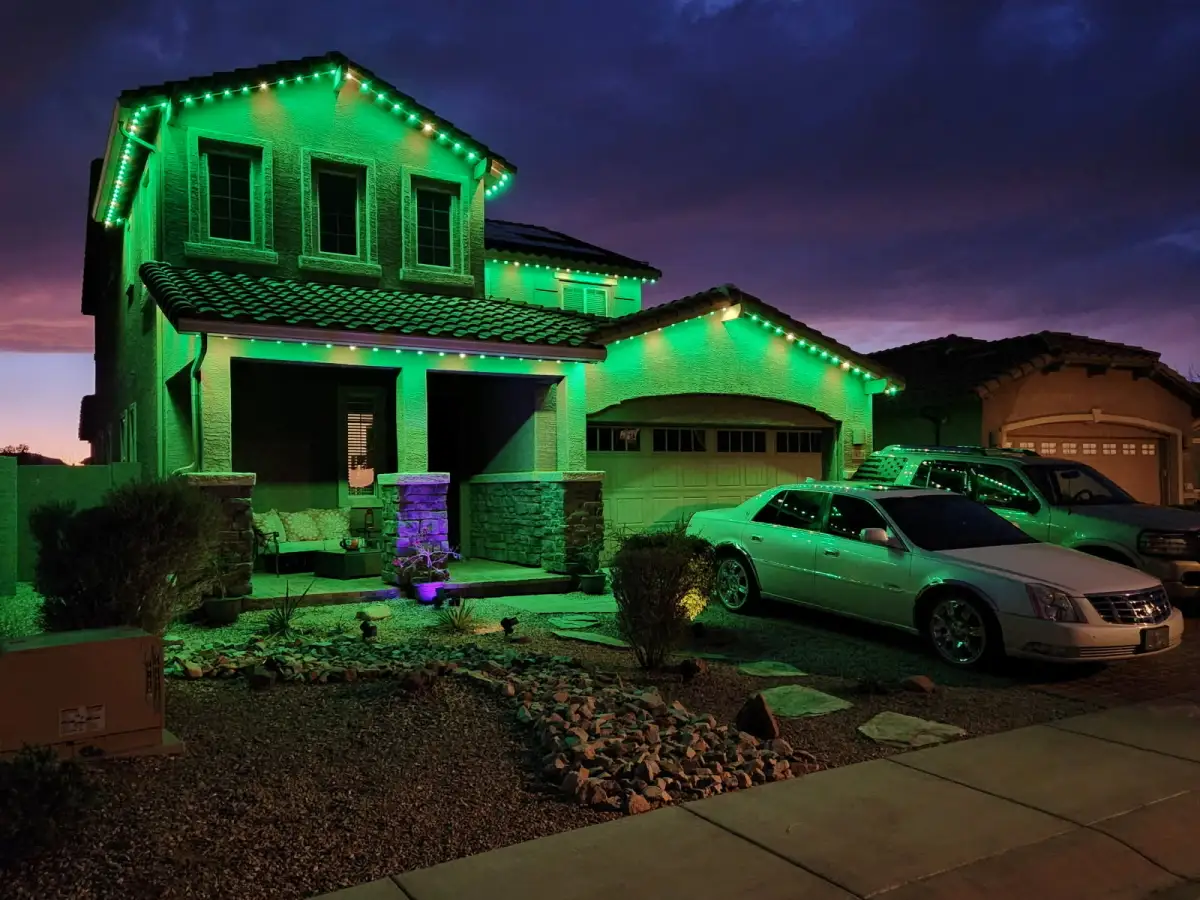
Permanent LED Lighting vs. Traditional Holiday Lights: The Real Cost Comparison for Omaha Homeowners
Every November, the same routine plays out across Omaha: drag the tangled lights out of the garage, test which strands still work, climb a ladder in
Permanent LED Lighting vs. Traditional Holiday Lights: The Real Cost Comparison for Omaha Homeowners
Every November, the same routine plays out across Omaha: drag the tangled lights out of the garage, test which strands still work, climb a ladder in 35-degree weather, and spend a weekend hanging them along the roofline. Then do the whole thing in reverse in January. Permanent LED lighting eliminates that cycle entirely, and when you look at the actual numbers over five years, the math is hard to argue with.
If you are weighing whether to keep wrestling with traditional holiday lights or switch to a permanent system, here is the real cost breakdown for our market. Actual numbers, not marketing fluff.
What Traditional Holiday Lights Actually Cost Over 5 Years
Most people think about the upfront cost - a few boxes from the hardware store, maybe a hundred bucks. But that number ignores everything that stacks up year after year.
Purchase and Replacement
A typical two-story Omaha home needs 150 to 250 linear feet of roofline lighting. In traditional lights:
- Initial purchase: $150 to $400 depending on quality (C9 bulbs, LED string lights, icicle strands)
- Annual replacement strands: $50 to $150 per year (burned-out sections, weather damage, squirrel chew-throughs - yes, this happens constantly in Omaha)
- Extension cords, clips, hooks, timers: $30 to $75 per year in miscellaneous hardware
Over five years, materials alone: $550 to $1,350.
Roofline Installation
A lot of homeowners in Bellevue, Papillion, and Elkhorn hire professionals because they do not want to deal with ladders on a two-story house. Going rates in the Omaha metro for holiday light installation and removal:
- Installation: $300 to $800 per season depending on home size
- Removal: $150 to $400 per season
- Total per year: $450 to $1,200
Over five years: $2,250 to $6,000 just in labor. Even if you do it yourself, that is two full weekends per year - one up, one down - and real safety risk.
Storage and Damage
Traditional lights need somewhere to live from January through October. They get tangled. They get crushed. Mice get into them in the garage. Every year, a chunk of your investment goes straight to the trash.
The Safety Problem
The U.S. Consumer Product Safety Commission reports over 15,000 emergency room visits per year related to holiday decorating, with ladder falls being the leading cause. In Omaha, add ice and snow on roofs in November and December, and this is a serious risk every season.
5-Year Cost Breakdown: Side by Side
For an average Omaha home with roughly 200 linear feet of roofline:
| Cost Category | Traditional (5 Years) | Permanent LED (5 Years) |
|---|---|---|
| Initial purchase/installation | $150-$400 | $1,500-$4,500 (one-time) |
| Annual light replacement | $250-$750 | $0 |
| Annual professional install/removal | $2,250-$6,000 | $0 |
| Hardware, cords, timers | $150-$375 | $0 (app-controlled) |
| Storage damage/loss | $100-$300 | $0 |
| Total over 5 years | $2,900-$7,825 | $1,500-$4,500 |
The permanent system pays for itself within two to three years for most Omaha homeowners. And that is before you factor in the year-round use that traditional lights cannot offer.
Metal Track vs. Adhesive: The Quality Difference That Matters
Not all permanent lighting is the same. The difference between a system that lasts and one that does not comes down to how the lights attach to your home.
Adhesive LED Strips
Stuck directly to the fascia with 3M tape or similar adhesive. Cheaper upfront. Here is what happens in Nebraska’s climate:
- Temperature swings from -10 to 100 degrees cause adhesive to fail within one to three years
- Strips sag, peel, and fall off, especially on south-facing rooflines that bake in summer
- Once they fail, you are re-gluing or starting over
- Look great on day one and progressively worse after that
Metal Track Systems
The TruTrack System uses precision-machined aluminum channels mechanically fastened to your home. LEDs click into the track and stay put. Here is why this matters:
- Aluminum handles every Nebraska season without expanding or contracting like adhesive
- Individual LEDs are replaceable - pop one out, click a new one in. Takes 30 seconds.
- The track creates a clean, finished look that becomes part of the home’s architecture
- No sagging, no peeling, no re-dos
When comparing permanent lighting quotes in the Omaha area, always ask: metal track or adhesive? It is the difference between a five-year solution and a twenty-year solution.
App Control: More Useful Than You Think
From your phone, you can:
- Change colors instantly for any holiday or event
- Set schedules so lights turn on at sunset and off at midnight automatically
- Adjust brightness from a subtle glow to full display
- Create custom patterns for holidays, game days, or everyday accent lighting
This is what transforms permanent lighting from a “Christmas lights replacement” into something your home actually uses year-round.
Year-Round Use: Where the Real Value Is
Traditional lights sit in a box eleven months out of the year. A permanent system works every day.
How Omaha Homeowners Actually Use These
Husker game days: Set your lights to Husker red on Saturdays in the fall. In neighborhoods around Papillion and La Vista where game day is a big deal, your house becomes the block’s rally point. Coordinate with neighbors for a full street of red and white.
Fourth of July: Red, white, and blue without hanging a single new strand. Ready in about 10 seconds of tapping your phone. Elkhorn goes big on the Fourth - this is a real use case, not a hypothetical.
Halloween: Orange and purple accent lighting for trick-or-treaters without a single extension cord in the yard.
Everyday curb appeal: A warm white glow along your roofline every evening. Think of it as the exterior equivalent of good interior lighting - subtle, intentional, always on. This alone changes how your house looks after dark.
Birthdays, graduations, parties: Pick school colors or favorite colors and light up the house for the event.
Why Spring Installation Is the Smart Move
Here is something most Omaha homeowners do not think about: spring is the best time to install, and March is the sweet spot.
Every permanent lighting installer in the Omaha metro gets slammed from September through November. Everyone waits until they are thinking about Christmas, then calls in a rush. The result:
- Longer wait times: Two to six weeks in peak season vs. one to two weeks in spring
- Less scheduling flexibility: In fall, you take whatever slot is available. In spring, you pick the day.
- Better conditions: March and April weather in Omaha is mild enough for comfortable exterior work. No rushing to beat the first hard freeze.
- Ready when you need it: By October, your system is installed, tested, and ready. While neighbors are pulling out ladders, you are opening an app.
If you are reading this in March and considering permanent lighting, you are ahead of the curve. Schedule a spring consultation and be set for the entire year.
What Installation Looks Like
A typical Omaha home takes one day. Here is the process:
- Design consultation: A technician assesses your roofline, discusses what you want, and provides an exact quote. No surprises.
- Custom fabrication: Metal track is cut to the exact dimensions of your home. Nothing is generic.
- Installation day: Crew mounts the track, installs LEDs, connects the controller. Most homes are done in four to eight hours.
- App setup and walkthrough: Before the crew leaves, you get a full walkthrough. You will be changing colors before they pull out of the driveway.
No holes drilled through siding. No visible wiring. No bulky clips. The track mounts along the fascia board and looks like a clean, intentional part of your home.
Does Permanent Lighting Add Home Value?
Curb appeal improvements consistently rank among the highest-ROI exterior upgrades. While there is not a dedicated study on permanent LED lighting specifically, here is what the data shows:
- Exterior lighting upgrades return 50 to 75 percent of their cost in added home value according to the National Association of Realtors
- Curb appeal is the number one factor in buyer first impressions
- Smart home features (including app-controlled lighting) are increasingly listed as selling points in Omaha real estate
A $3,000 permanent system that adds $1,500 to $2,250 in home value, eliminates $500 to $1,500 in annual costs, and provides year-round enjoyment is a solid investment.
Common Questions
How long do they last?
Quality metal track systems with LED modules are rated for 50,000 hours or more. At typical residential usage (four to eight hours per day), that is 15 to 30 years before you would need to think about replacing LEDs.
Can they handle Nebraska winters?
Yes. Metal track systems are designed for extreme weather. The aluminum handles temperature swings from well below zero to over 100 degrees without warping or loosening. The LEDs themselves operate from -40 to 120 degrees Fahrenheit.
What if a single LED fails?
With a track system, individual LEDs pop in and out. If one fails (rare, but it happens over a decade or more), you replace that single module. Takes about 30 seconds.
Do I need to take them down in spring?
No. That is the entire point. The system is designed to be permanent. When you are not using colored lighting, set them to a warm white accent or turn them off. They are discreet enough that most people will not notice them during the day.
Can I install them myself?
Technically, yes. But given roofline-height work, low-voltage wiring, and precise measurements for custom track cuts, professional installation is the better call. Professional installation also comes with a warranty that DIY does not.
The Bottom Line
When you run the numbers, permanent LED lighting is a practical financial decision, not a luxury upgrade. It eliminates recurring costs, removes safety risks, and adds year-round functionality.
For a typical Omaha home: $1,500 to $4,500 one time versus $3,000 to $8,000 over five years with traditional lights. App control, year-round color options, Husker game day displays, and zero ladders.
Spring is the time to do it. Installers have availability, weather is cooperative, and you will be set before the next holiday season crosses your mind.
Ready to see what permanent LED lighting would look like on your home? Request a free spring consultation and get an exact quote for your roofline. No obligation, just real numbers for your specific home.
Related Articles
The Omaha Homeowner's Checklist for Hiring a Permanent Outdoor Lighting Company
Year-Round Permanent Outdoor Lighting Ideas for Omaha, NE Homes
7 Myths About Permanent Outdoor Lighting in Omaha NE: Debunked
Ready for an Omaha Roofline Lighting Estimate?
Call TruLight Omaha for a measured roofline estimate.
Ready for an Omaha Roofline Lighting Estimate?
Call TruLight Omaha for a measured roofline estimate.
(402) 704-8151