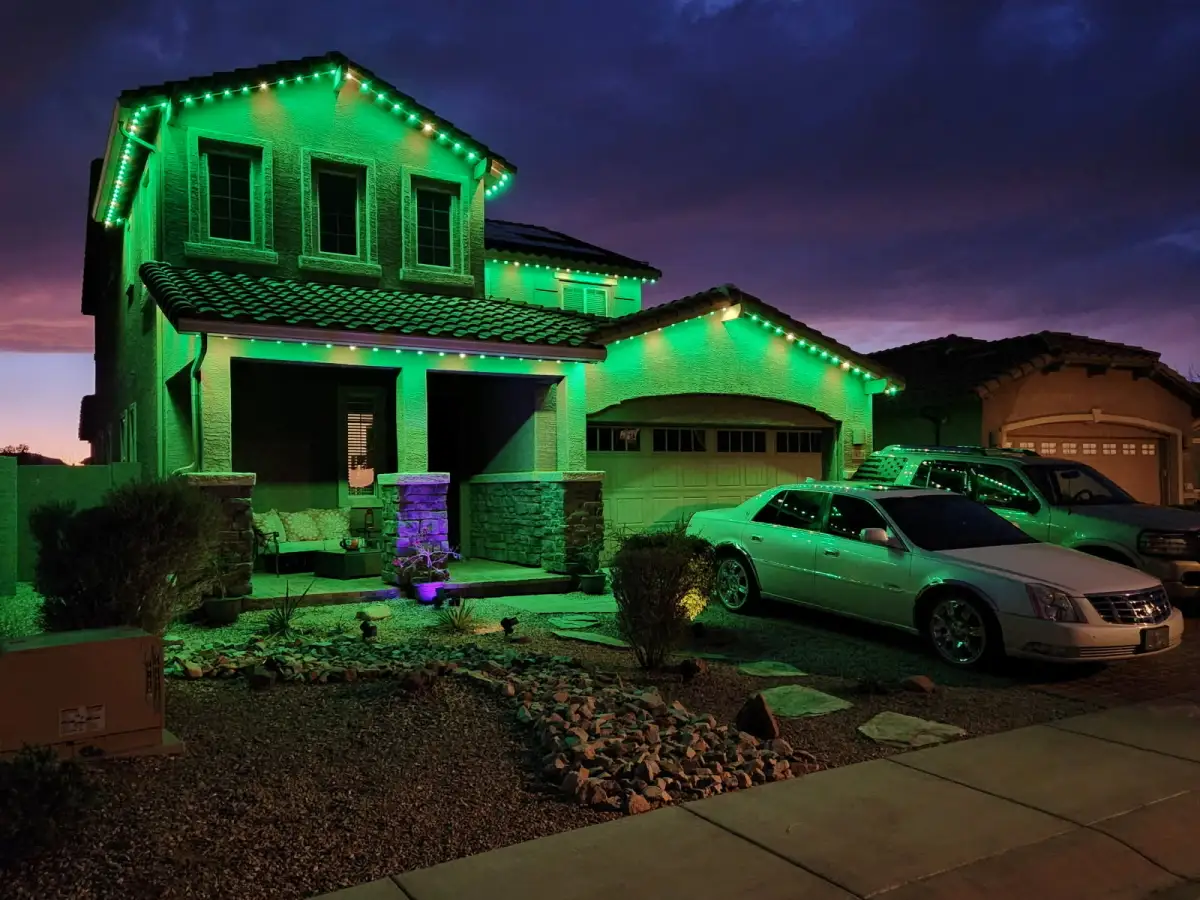
Our metal track systems use low-profile aluminum channels measured to Omaha-area rooflines, soffits, fascia, and architectural details. The track hides wiring and LED nodes in daylight, then delivers app-controlled color, warm white, and holiday scenes after dark.
Omaha-area replies during business hours
Aircraft-grade aluminum construction
Custom-cut on-site for perfect roofline fit
Virtually invisible during daytime
Withstands Nebraska snow, ice, and heat
Individually addressable LED nodes
No exposed wires or bulky fixtures
Professional powder-coat finish options
Lifetime structural warranty
No obligation. We'll visit your property and provide exact pricing.
Year-round permanent LED roofline lighting with warm white, holiday, and game-day scenes.
Permanent holiday scenes for Christmas, Halloween, game days, and seasonal events without annual setup.
Permanent accent zones for entries, rooflines, patios, walks, landscaping, and nightly curb appeal.
The track is the part of a permanent lighting system that decides whether the finished work looks like a clean exterior upgrade or a row of exposed bulbs. We use metal track to hold LED nodes in a straight, protected line along fascia, soffit edges, garage returns, porch faces, and selected accent details. The track helps hide wiring, keeps spacing consistent, and gives the roofline a finished daylight appearance. That is important for Omaha homes where the lights may be visible from the street every day, even when they are turned off.
Metal track also helps the system handle the realities of Nebraska weather. Roof edges deal with wind, snow, ice, sun, and rapid temperature swings. A permanent installation needs secure fastening, sensible wire routing, and materials chosen for exterior exposure. We evaluate the mounting surface before installation because painted fascia, aluminum soffit, vinyl trim, gutter edges, and older wood details do not all accept hardware the same way. The right attachment plan protects the look of the home and supports the long-term reliability of the lights.
Track layout is planned alongside the lighting scenes. A straight front roofline may only need one clean run, while a home with peaks, dormers, a porch, and a side-entry garage may need multiple zones. Separate zones can let the main roofline run warm white while the entry uses a softer accent, or let holiday colors appear on the most visible elevations without lighting areas that face a neighbor. App control is easier to use when the physical track layout matches how the homeowner actually wants to control the exterior.
We provide metal track lighting systems for Omaha, Papillion, Bellevue, La Vista, Elkhorn, Gretna, Bennington, Council Bluffs, and Springfield. During the estimate, the team reviews linear footage, roof access, power access, color of the track, controller placement, and the sections that should be included or left unlit. The finished system should look intentional, stay organized, and make permanent LED lighting practical for daily curb appeal, holiday scenes, and business visibility.
A good metal track installation begins before the first fastener is set. We measure the roofline, check how the soffit and fascia meet, note gutter placement, and look for transitions where a run should stop or turn. Corners, porch returns, dormers, and garage offsets all affect the final appearance. When those details are planned up front, the LEDs appear evenly spaced and the wiring stays organized.
Track color is another practical choice. The goal is for the system to recede during daylight, so the track should coordinate with fascia, soffit, trim, or gutter color when possible. On some Omaha homes a dark track works best; on others, a lighter finish is less noticeable. We review that during the estimate because the permanent system will be visible every day.
The track layout also supports serviceability. Permanent lighting should not require tearing apart the roofline if a controller setting needs attention or an individual node needs replacement. Sensible access points, clean routing, and documented zones help keep the system manageable after installation. That matters for homeowners who expect the lights to work for everyday curb appeal as well as holiday scenes.
For commercial properties, track planning can be even more important. Storefronts, entrances, signs, and customer paths may need different visibility than a residential gable. We can map the system around business hours, street visibility, and app-controlled scenes while keeping the daytime look professional.
Metal track estimates also help prevent scope confusion. We identify the included roofline runs, trim color assumptions, controller location, power access, and any areas intentionally left unlit. That gives the owner a clear map before installation day and helps the crew keep the finished system aligned. For Omaha properties with additions, detached garages, corner-lot exposure, or mixed exterior materials, that planning step is often the difference between a basic lighting job and a permanent system that looks integrated. It also helps future service calls because the layout, zones, and access points are documented from the start.