What to Submit to an HOA for Permanent Roofline Lights
Send the track, not the light show. Almost every HOA rejection we see comes from a homeowner who led with photographs of a house lit up in color, when the committee's actual question is what the house looks like in daylight for the other eleven months.
Permanent lighting is unusual for a review board. Holiday lights are temporary and rarely need approval. Landscape lighting is well understood. A fixture mounted to the roofline year-round sits between the two, and most covenants written before these systems existed do not mention them at all. That gap is why submissions get held rather than refused, and it is why what you send matters more than it should.
What the committee is actually deciding
Three things, in this order:
Is it visible when it is off? This is the whole question for most boards. They are protecting the daytime look of the street.
Does it change the roofline? Anything that alters the profile of the house, adds bulk, or reads as an attachment gets more scrutiny than something recessed into the trim line.
Can it be operated in a way that annoys the neighbors? Boards have seen enough color-cycling installations to worry about it. Being specific about control is what settles this.
Address those three and most of the rest is paperwork.
What to put in the submission
A daylight photograph of your own roofline as it is now, from the street. Not a render, not a manufacturer's stock image. This is the before shot the committee will compare everything against.
The track color, matched to your trim. Say it explicitly: the channel is finished to match the fascia. If you can, include a close-up of the channel in the color you have chosen against a sample of your trim. This single item resolves more submissions than anything else.
A daylight photograph of an installed system on a house with similar trim, taken from a normal viewing distance rather than a close-up. Close-ups make the channel look enormous. From the curb it reads as a trim line.
Where the track will run, marked on a photograph or a simple elevation sketch. Front roofline only, or front and one side, or the full perimeter. Boards react badly to open-ended approvals, so be exact about the extent.
How it is fastened. State that the channel mounts to the fascia board and that nothing penetrates the roof surface or the shingles. Committees worry about roof warranties, and this sentence answers it before it is asked.
The control method and how you intend to use it. This is where you volunteer a limit. Something like: warm white for everyday use, color only on recognized holidays, off by a set hour. Offering that restriction yourself is far more persuasive than being told to accept it.
Fixture specification. Manufacturer, channel dimensions, and the fact that the lights are recessed into the channel rather than surface mounted.
Who is installing it, and confirmation they carry insurance.
What gets submissions rejected
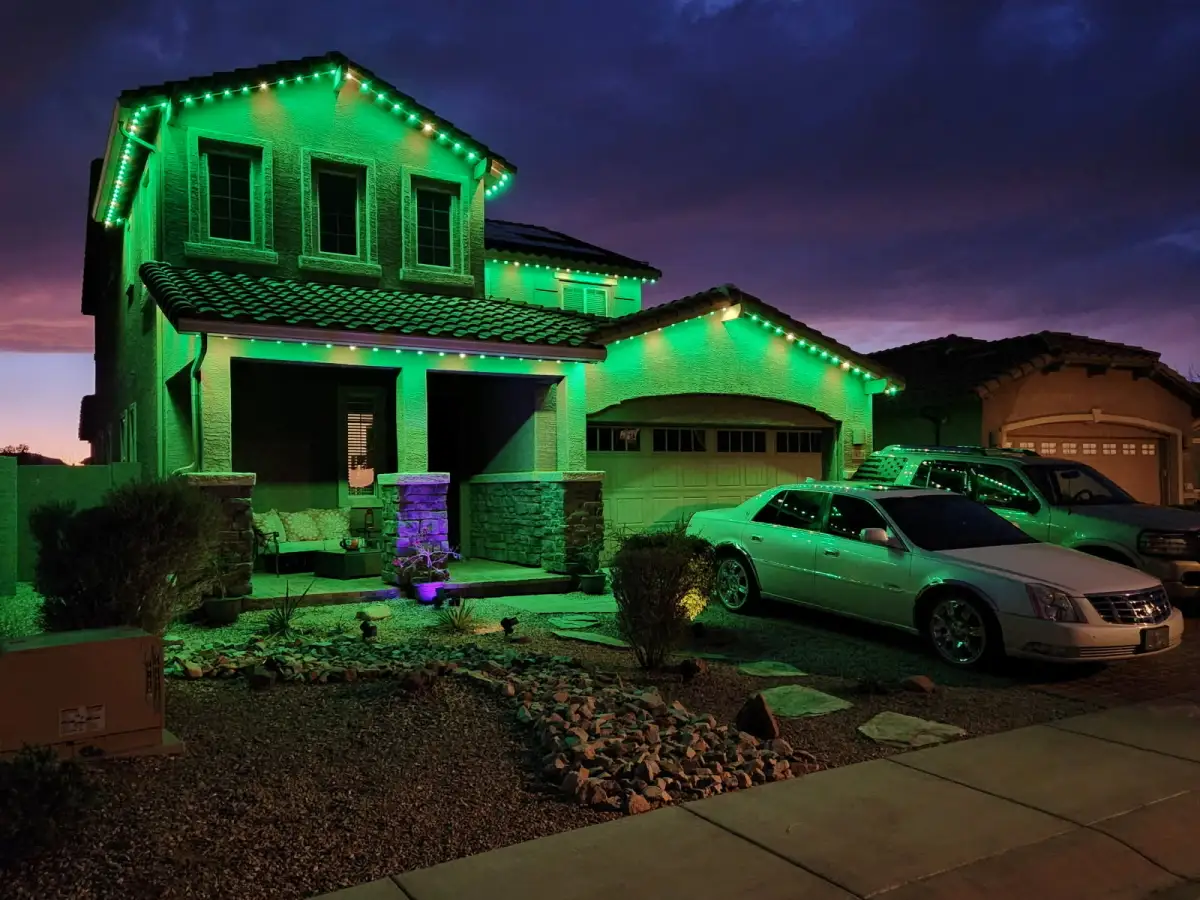
Leading with night photographs in saturated color. It is the most common mistake. Those images are why boards imagine the worst.
Vague extent. "Around the house" invites a no. Say which elevations.
No daylight evidence at all. If the committee cannot picture the off state, they will assume it is conspicuous.
Ignoring an existing rule that nearly applies. If your covenants restrict permanent exterior fixtures, colored lighting, or roof attachments, address that clause directly rather than hoping nobody reads it. Explain why this system does or does not fall under it, and what you are willing to accept as a condition.
Asking after installation. Retroactive approval is a different and much worse conversation.
Anticipate the conditions
Most approvals come back with strings, and you can save a round trip by proposing them yourself:
- Color limited to specified holidays, white or warm white otherwise
- A nightly off time
- No flashing, chasing, or animation
- Channel color matched to trim, with any change requiring re-approval
- The homeowner responsible for removal or repair if the system fails or the property sells
A submission that already contains these reads as someone who has thought about their neighbors, and it gives the committee an easy yes.
The practical sequence
Read your covenants first and find the clause that most nearly applies. Get the daylight photographs. Confirm the track color against your trim before you submit, because changing it afterwards means resubmitting. Send the package, propose your own operating limits, and get the approval in writing before anyone drills anything.
If your board meets monthly, build that into your timeline. Homeowners who want lights up for the holidays and start the process in November are usually disappointed.
Trulight installs permanent LED lighting across the greater Omaha metro, and we can supply the daylight photographs, channel color samples, fixture specification and mounting detail in the form boards expect. If your HOA has already asked a question we have not covered here, tell us what they asked and we will put the answer together.