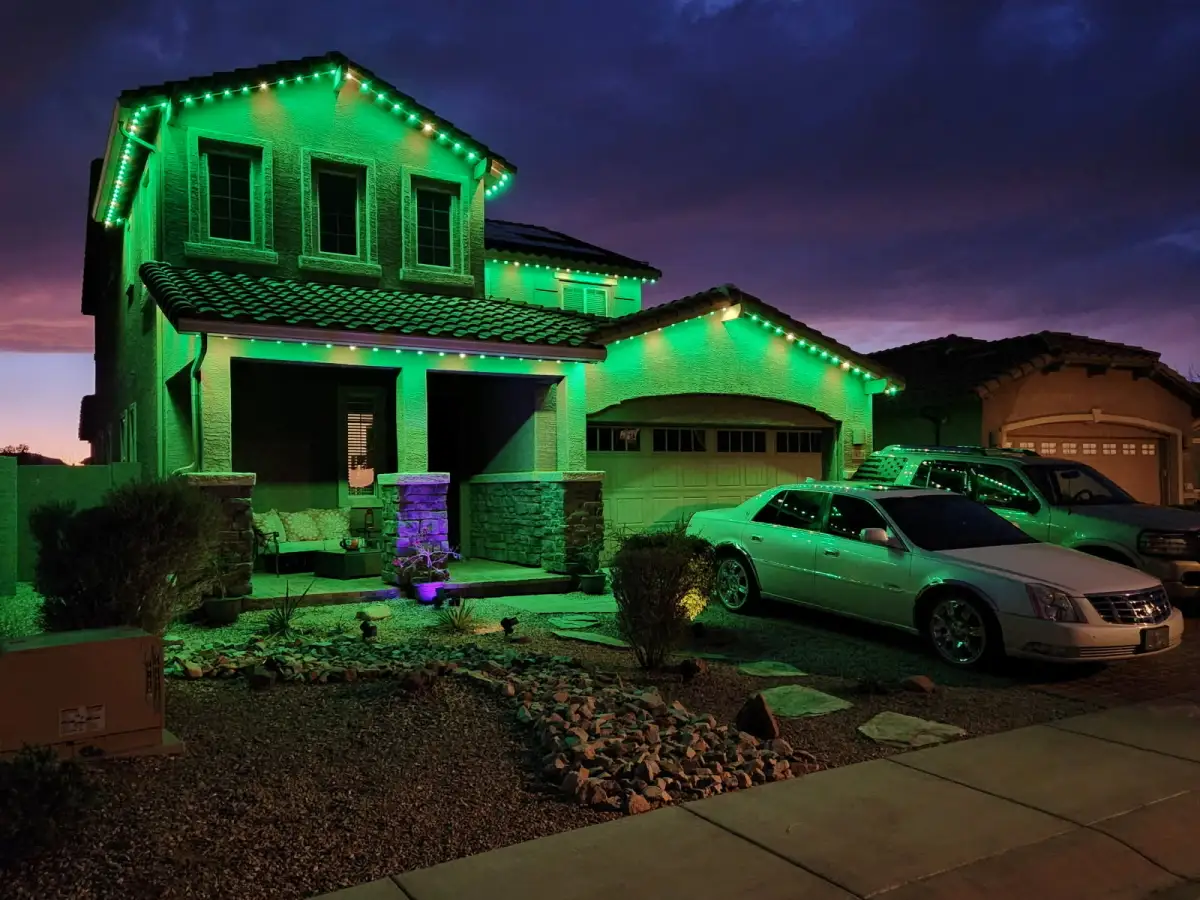
Permanent LED Lighting in Nebraska Weather: What Omaha Homeowners Should Know
How Omaha homeowners should evaluate permanent LED lighting for wind, snow, ice, heat, track quality, and year-round exterior use.
Permanent LED lighting in Nebraska weather has to deal with more than one season. Omaha homes see summer heat, spring storms, strong wind, freezing rain, snow, and freeze-thaw cycles that can expose weak products and sloppy installation work.
That does not mean permanent lighting is fragile. A properly planned system can be a practical year-round upgrade for curb appeal, holiday lighting, security, and everyday accent lighting. The difference is in the track, wire management, controller placement, and the way the system is installed on the home.
Why Weather Matters for Permanent LED Lighting in Omaha
Omaha weather is hard on anything attached to the exterior of a home. Wind can tug at exposed wire. UV can fade cheap plastic. Ice can collect along roof edges. Fast temperature swings can make materials expand and contract. If a lighting system is installed like temporary holiday decor, those conditions can shorten its life.
Permanent LED lighting is different because it is meant to stay in place. The lights should sit in a clean channel or track, the wiring should be protected, and the power and control components should be placed where they are accessible without being exposed to unnecessary moisture or impact.
The Track Protects More Than the Look
Metal track lighting systems are popular because they look cleaner from the street, but the track also matters for weather performance. A good track helps hold the lights in line, reduces visible wiring, and gives the finished system a more permanent feel.
For Omaha homeowners, this is one of the main reasons to compare permanent lighting options carefully. Exposed clip systems can work for seasonal use, but they are not the same as a low-profile system designed to blend into the roofline after the holidays are over.
Wind and Wire Management
Wind is one of the easiest ways to spot a weak installation. Loose wire, unsupported corners, and awkward runs across trim can move, rub, or sag over time. The system may still light up, but it will not look like a permanent upgrade.
A professional permanent LED installation should keep the wiring controlled and intentional. Runs should follow the roofline cleanly. Transitions should make sense. The finished work should not depend on temporary clips or visible shortcuts that were never meant to handle years of Nebraska wind.
Snow, Ice, and Freeze-Thaw Cycles
Snow and ice do not automatically make permanent lighting a bad idea, but they do make placement important. Lights mounted along fascia, soffit, and trim need to be installed with the home in mind, especially where roof edges collect meltwater or ice.
Freeze-thaw cycles can also reveal poor routing. If water collects around an exposed connection and then freezes, small problems can grow. Homeowners should ask how connections are protected, where controllers are placed, and how the installer handles transitions around corners, peaks, and returns.
Heat, Sun, and Everyday Use
Nebraska summers bring heat and direct sun, especially on south and west-facing rooflines. Permanent LED lighting should be selected and installed for outdoor use, not treated like indoor decorative lighting moved outside.
Heat also affects how homeowners use the system. One advantage of app-controlled permanent lighting is that the lights can run at lower brightness for warm white accent lighting, then switch to brighter color patterns for holidays, parties, or game days. You do not have to run the system at full intensity every night to get value from it.
What to Ask Before Installing Permanent LED Lighting
Before choosing an installer, ask how the system handles weather, not just how it looks in photos. The right questions make the differences easier to see:
- What type of track or channel will be used?
- How visible will the system be during the day?
- How are wires routed and secured?
- Where are the controller and power components placed?
- How are corners, peaks, and multi-level rooflines handled?
- Can the system be used for warm white accent lighting, not just Christmas colors?
Good answers should be specific to your home. A simple ranch, a two-story home in West Omaha, and a house with multiple roof peaks should not all be treated like the same installation.
When Permanent LED Lighting Makes the Most Sense
Permanent LED lighting makes the most sense when you want a clean year-round system instead of a seasonal project that has to be installed and removed every winter. It is especially useful for homeowners who decorate for multiple holidays, want subtle evening curb appeal, or want app-controlled lighting without storing boxes of lights.
It also works well when the roofline is difficult to decorate safely. If you are dealing with height, steep pitches, awkward corners, or a design that takes a lot of ladder work every year, a permanent system can make the home easier to enjoy across seasons.
The Bottom Line for Omaha Homeowners
Permanent LED lighting can hold up well in Nebraska weather when the system is designed for exterior use and installed with clean track, protected wiring, and smart component placement. The goal is not just to survive December. The goal is a lighting system that looks right in June, October, and every holiday season in between.
Trulight Omaha installs permanent LED lighting, metal track lighting systems, holiday lighting, and accent lighting for homeowners across the Omaha metro. To talk through your roofline, weather exposure, and year-round lighting goals, visit https://www.trulightomaha.com or call (402) 704-8151.
Ready for an Omaha Roofline Lighting Estimate?
Call TruLight Omaha for a measured roofline estimate.
(402) 704-8151