Permanent Holiday Lights in Nebraska: What Actually Holds Up
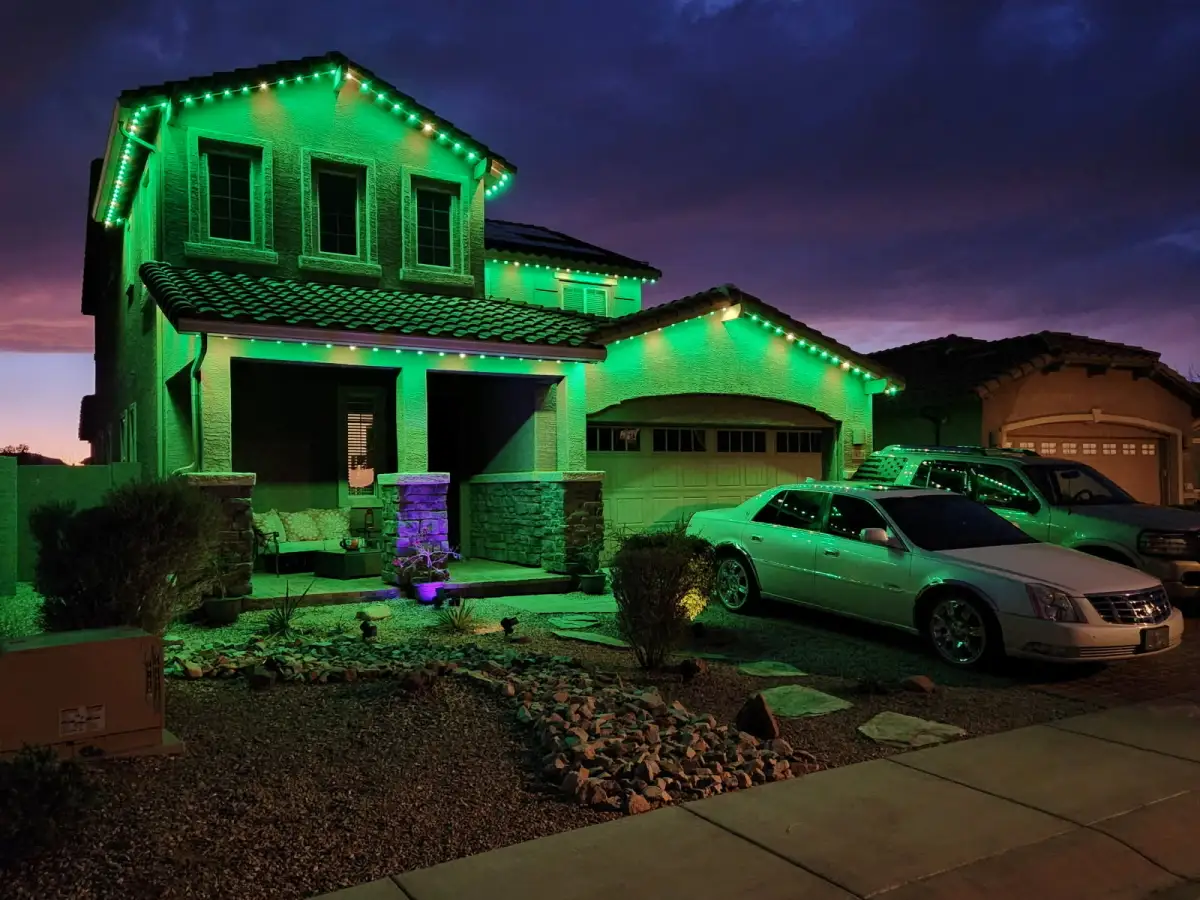
Permanent holiday lights are LED fixtures installed once, along your rooflines or trim, that stay up year-round and change color through an app instead of a ladder. In Nebraska, the honest answer to "do these work here" comes down to two things: how the system is mounted and whether it's rated for what this state's weather actually does.
What "permanent" means in practice
The lights sit in a track, usually aluminum or a UV-stable channel, that's fixed to your fascia, soffit, or roofline. Individual LED diodes snap into or run along the track, sealed against moisture. A low-voltage controller ties the whole run together and connects to an app on your phone, where you set colors, patterns, and schedules. Nothing gets strung, stapled, or taken down each season. You switch it from warm white for everyday use to red and green for December, orange for October, or your team's colors for game day, in a few taps.
Why Nebraska's weather is the real test
Omaha sees a wider swing than most markets these systems get installed in: subzero cold and ice in winter, humid heat in summer, and wind and hail in between. Three things matter more here than in a milder climate:
Attachment. A track that's screwed into fascia with proper spacing handles wind load and the weight of ice buildup. A track that relies on adhesive clips alone doesn't, especially once ice forms along a roofline and adds real weight to the run. Ask how a system is being fastened to your specific roofline, not just whether it's "permanent."
Freeze-thaw cycling. Materials that stay flexible from summer heat into a Nebraska January without cracking or pulling away from their mounting are doing more work than they get credit for. Cheap track turns brittle in the cold; sealed diode housings keep moisture out of the electronics through repeated freeze-thaw swings.
Wind and hail exposure. A soffit-mounted or fascia-mounted run sits more protected than lights strung loose along a gutter edge, which is one of the practical advantages of a fixed track system over traditional string lights in this part of the country.
What it replaces
If you've put up and taken down string lights for years, the case for permanent lighting is mostly about what you stop doing: no ladder in November, no storage bin in the garage, no replacing a burned-out strand mid-season, no re-stringing every single year for one holiday and then nothing for eleven months. The system runs on LEDs, which draw meaningfully less power than incandescent string lights and last far longer before a diode needs replacing.
Beyond Christmas
Because color and brightness are controlled through the app rather than by which string of lights you physically hung, the same install covers Halloween, the Fourth of July, a graduation party, or just porch lighting on a normal Tuesday. That versatility is a real part of the value in a climate with a genuine four-season calendar. Some homeowners run warm white nightly as accent lighting and switch to full color only around holidays.
Timing the install
Permanent lighting goes on the roofline, so it's worth having it done before the ground freezes and before the pre-holiday installation rush, rather than the week before Thanksgiving. Once it's mounted, the timing of when you turn on which color is entirely yours.
What to ask before you commit
Not every "permanent lights" offer is built the same. Before signing anything, ask what the track is made of, how it's fastened to your roofline, and how the system is expected to perform through an actual Nebraska winter, not a showroom photo. A contractor who can answer those specifically, for your roofline, is worth more than one who just quotes a color count.
Trulight Omaha installs permanent LED lighting with clean wire management across the greater Omaha metro, for holiday displays, game-day colors, and the porch light you leave on the other eleven months of the year.