What to Know Before You Hire Someone to Hang Your Christmas Lights
If you're searching for outdoor Christmas light installation, you're probably weighing two things: is it worth paying someone, and if so, what actually happens once you hire them. Here's what a professional install typically covers, why most homeowners end up hiring it out, and when to call so you're not scrambling in December.
What a professional install actually includes
A full-service holiday lighting job usually breaks into four parts. First, a design walkthrough: someone looks at your roofline, gutters, trees, and any architectural features and maps out where lights go and how much you'll need. Second, the install itself, done by a crew trained to work at height with stable ladders and fall-protection gear for steeper or taller roofs. Third, in-season maintenance: if a strand goes dark or a storm knocks a section loose, the company comes back and fixes it, so you're not the one troubleshooting a dead bulb in January. Fourth, takedown after the season, often with the lights stored off-site until next year instead of going back into your garage rafters.
Most companies also attach lights with clips rather than nails, staples, or adhesive, which matters more than it sounds like. Nails and staples put holes in shingles and fascia boards that you'll be dealing with long after the lights come down.
Why people pay someone else to do this
The honest answer is safety and durability, not just convenience.
Falls are the real risk. The U.S. Consumer Product Safety Commission has tracked close to 15,000 emergency-room visits a year tied to holiday decorating, with roughly half of them falls off ladders or roofs. A pro crew does this every week for two months straight. A homeowner does it once a year, often on a wet roof in November, which is exactly the kind of mismatch that leads to a bad fall. Reputable installers also carry liability insurance and workers' comp, so if something does go wrong on your property, it's not coming out of your homeowner's policy.
Then there's the lights themselves. What a crew hangs is usually a different product than what's on the shelf at a big box store. Commercial-grade LED strands use shatter-resistant polycarbonate bulbs sealed into a one-piece bulb-and-socket unit, so water can't work its way in and corrode the connection, which is the most common way retail strands fail midway through the season. They're also built with more diodes per bulb, so they run brighter and hold their color longer. A commercial-grade strand is commonly rated for something like 6 to 8 seasons of use; a retail multi-pack from the drugstore usually doesn't make it that far, and when one bulb on an older-style strand fails, it can take the whole run with it.
None of that means DIY is a mistake for every house. If you've got a single-story ranch with a straightforward roofline and you're comfortable on a ladder, doing it yourself with decent-quality lights is a reasonable call. Hiring out earns its keep once you're dealing with a second story, a steep pitch, tall trees, or a display big enough that a dead section in week three would actually bother you.
When to actually call
Installers open their books earlier than most people expect, often by late summer, and calendars fill steadily from October into mid-November. Wait until after Thanksgiving and you're picking from whatever install dates are left, if there are any. If you know you want lights up this year, the safe window to call is September or October, not the first cold snap in December.
Timing matters more in Omaha than in a lot of markets because the install window is shorter. Crews want strands up before the ground freezes and before the season's first real snow and ice, since accumulated ice adds weight to a strand and can stress gutters, clips, and mounting points that were only ever built to hold the lights themselves. On the other end, takedown crews generally won't work a snow-covered or icy roof in January or February, so a bad stretch of winter weather can push removal later than you'd planned. Booking early gives you room on both ends of that window.
The alternative worth knowing about
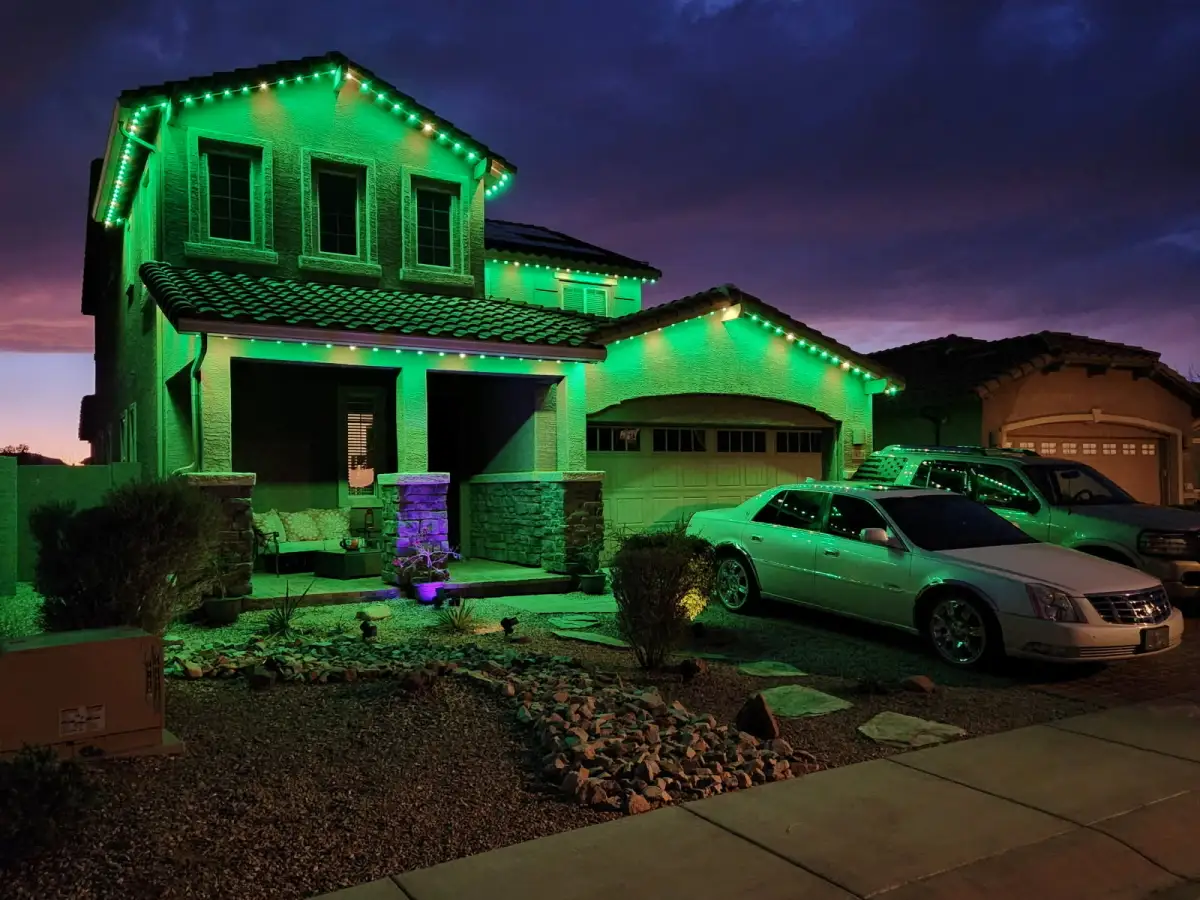
If the idea of repeating this every fall, and paying for install and takedown every single year, doesn't appeal to you, it's worth knowing that a temporary seasonal install isn't the only option. Trulight Omaha installs permanent, app-controlled LED lighting on a metal track fitted to your roofline. It goes up once, switches color for Christmas, the Fourth of July, game day, or anything else from your phone, and there's no annual install or takedown crew to schedule. It's a different trade-off than a seasonal service, not a straight swap, so if you're set on classic string lights for this year, a seasonal installer is still the right call. But if you're tired of the annual scramble, it's worth a look before you book.
The bottom line
A professional install buys you safety, durability, and lights that still work in week six of the season, not just someone else doing the ladder work. If you want lights up this year, call in September or October rather than waiting for the first cold snap, and decide up front whether you're solving this problem for one season or for good.